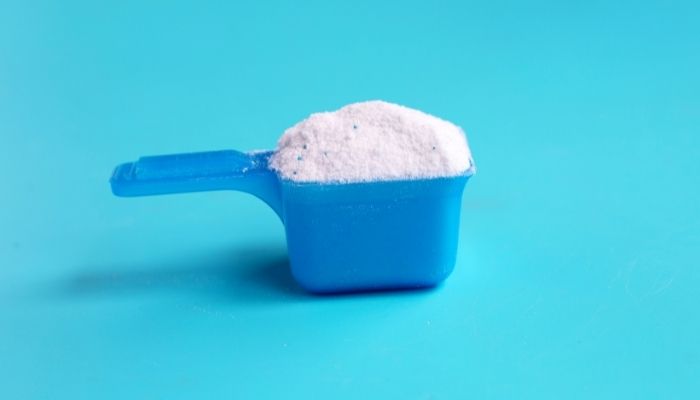
A small big business: ecological detergents in reused packaging

With a circular economy model in development, the reuse of plastics is still a minority activity but with great potential. Goccia Verde, with five years of experience and based in Barcelona, has grown its business thanks to the production and bulk sale of detergents and soaps with low environmental impact. Today it has 25 stores in Spain.
As has been seen, many plastic packaging ends up in garbage or inappropriate places such as rivers, seas, and oceans every day. The manufacture of a 75-gram container is equivalent to the emission of 134 grams of CO2 and the waste of 239 liters of water, in addition to the impact of its poor management as garbage.
Far from decreasing, in Europe, the total demand for plastic will continue to grow. Specifically, 1.5% in 2017. Globally, the segment of polyethylene resins (with which the bottles of detergents and liquid soaps are made) is expected to increase by 4% annually to 99.6 million metric tons, with a value of 141 billion euros in 2018.
The effects of this big business are that, according to PlasticsEurope, of the 25.8 million tonnes of post-consumer plastics that ended up in official waste streams in 2014 in the EU, 29.7% received a recycling process (mechanical or chemical); 39.5% was incinerated, and 30.8% ended up in a landfill. Unsustainable or misguided figures.
The reuse of polyethylene
Although the company has its packaging, it recommends that its customers purchase their products in used personal hygiene and home care packaging. They are made of polymers that allow reuse. One of them is usually polyethylene or PEHD. On the other hand, this company advises against reusing water bottles (made of PET) not to risk quality and safety.
In this way, customers buy the amount they need directly from the producer and, ultimately, have detergents, soaps, and cosmetics with low environmental impact. Green Goccia tries to meet different objectives, including avoiding throwing away a plastic container that can have several lives and reducing the contamination of sanitary water.
On the other hand, customers pay between 10% and 20% less than if they bought the top brand detergent products.
In addition to household cleaning, laundry, and personal hygiene. All of them are free of silicones, phosphates, sulfates, nickel, kathon, parabens, preservatives; they are not tested on animals; they are hypoallergenic and biodegradable up to 100%.
One last piece of information, the total worldwide income of the Unilever group in the home care segment, was 10,159 million euros, and in the personal care segment, 20,074 million euros in 2015. Of course, it is a lovely market.